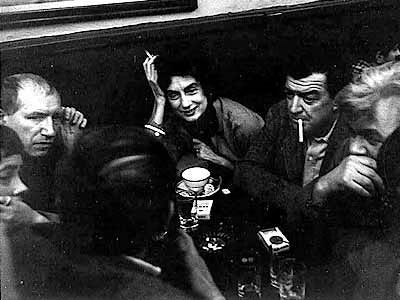
I Miss Criticism
And why you should too. An off-the-dome freestyle think piece about visual art and my sonder over missing out on its 20th-century era of theoried collectivists, engaging audiences, and big criticism.

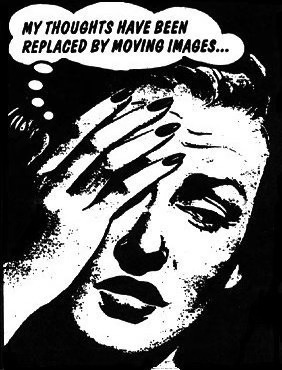
Real criticism. The kind of scathing opinions that might make you reconsider all your work yet be grateful someone had them, glad that you had some kind of waking impact.
Know it or not, men such as Charles Baudelaire, W.E.B. Dubois, Alfred Stieglitz, Walter Benjamin, Alfred H. Barr, Theodor W. Adorno, Clement Greenberg, Michael Fried and Robert Hughes were incremental in guiding the rapid progression of the arts and how they were interpreted throughout the 20th-Century. Throughout videos, essays, letters, exhibition statements, previews and newspapers- they often posed intellectual questions about the nature of forms, brought forth the unconscious decisions or desires in a work from both the audience and the artist, and served as the gatekeepers to the halls of major-league museums and galleries. Artists, other critics and audiences were not expected to take them at a hurtful face-value, as they understood that they had already shown great respect and consideration by inquiring and deciding on which works to appraise in the first place.
Thus, the splintered groups formed a symbiotic relationship, and what I will call The Three. Critics, who supplied their ideas of essence, through their constant questionings of value and by introducing wider swathes of people to the concurrent debacles and debates in the worlds of science: philosophy, sociology and psychology. Artists, who attempted to answer these questions, now grounding their works within the greater literary schools of thought, finding new ways to think through creative projects and learning of the semiotics and language to accurately and concisely describe their work and its intentions. Audiences, who acted as bridge between the two, often holding their own intuitive opinions, ideas and views attuned to both what the critics had to say and what the artists had put infront of them, quintessential in seeing and regarding if the connection was there.
The Three served as equally-reliant yet sometimes opposite forces, consistently ushering in new questions, responses, and regards to make-up what would we come to understand as the review system, holding each group accountable for their engagement with, and expected acknowledgment of the other two. This triumvirate would also serve as a major inspiration for those seeking direction, and ensured that the circuit of culture was always moving forward due to advancements and conversations in the arts; I believe this allowed the field to be greatly respected as many other forms of academia still are, as though initial audiences may be late to adoption of a breakthrough, this sort of creative peer-review system could be pointed toward the framework or manifesto that this new work was stemming from. And this does not mean that everyone had to respect, agree upon or even recognize certain forms of art or their breakthroughs; but greater, respectful discourse with a traceable lineage for anyone to willing to jump into it was always available for those who wished to.
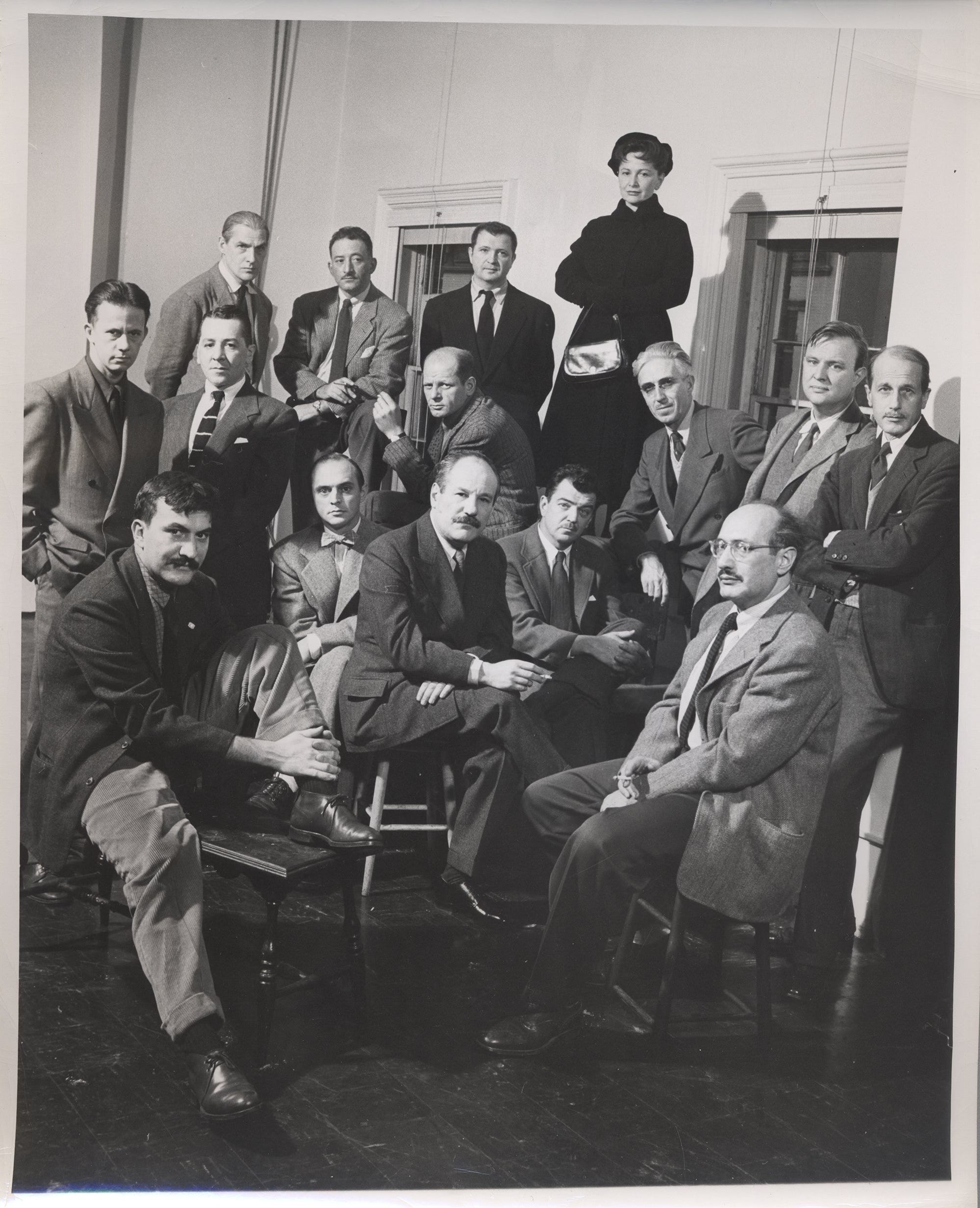
"I learned more about painting in the Cedar Bar than in any art school."
— Joe Stefanelli
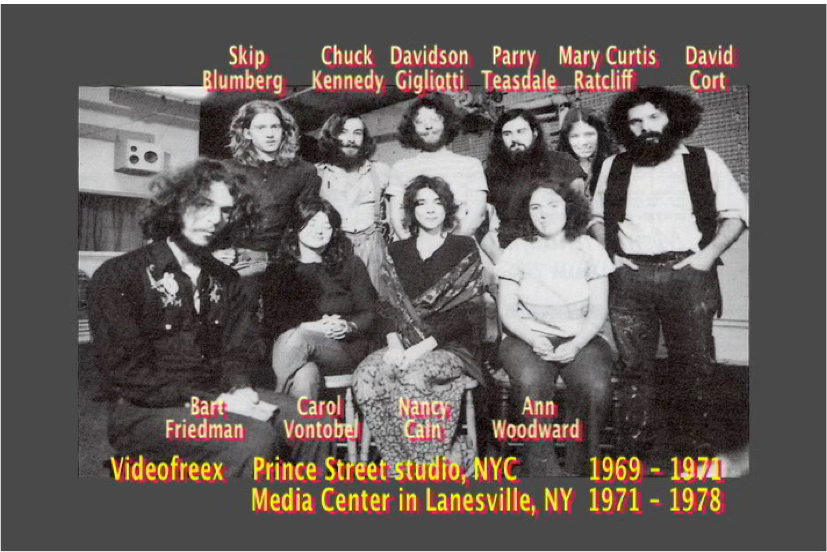
This modality also allowed artists to do something which you see no more of, and that is to collectivize towards a movement. Some example artist collective groups or schools of thought consisted of the surrealists and first-ever interdisciplinary artist participants of the Dada, the materially-conscious Bauhaus, The Hudson River School of naturalistic American painters, Ansel Adam’s Stieglitz-inspired large-format photography guild f/64, Greenberg’s formalist/abstract expressionist bad-boy golden children The Irascibles, the guerilla-filmmaking hippie clique of Videofreex, The Japanese performance convention of Gutai, the French-revolutionary students who made-up the The Situationist International and a myriad of other high-spirited, inspired, critic derived, socially aware and barrier-breaking collectives of artists (that I can give you a list of you if you're feeling inspired and want to see more) who worked, shared, fought, fucked, thought and laughed together not for monetary reasons or as a measure to ensure proximity-inclined group success. But for a genuine theoretical love and desire to understand their mediums through brutal interrogations with each other and the craft.
In the time since, it is rare we see art movements or even collectives as prominent as the ones mentioned before. With the decline in Modernism and a rise in the movements that opposed it throughout the latter half of the twentieth century, artists became suspicious and disposed toward the industry gatekeeping and strong opinions often held by art critics who were quickly being imitated and out-bid by an ignorant generation of satisfied nepotistic-capitalists. With not much notoriety as the Artists nor as anonymous as the Audience, with a much slower turnover rate and maturation cycle, the aging Art Critic was singled-out as the middle man of The Three, and unconsensually substituted by art agents, yellow-page journalists, reactionary politicians or celebrity consumers- who unsubstantiatedly bashed or appraised works of art and collectivists not for reasons of literary importance or for the benefit of canonical culture, but for their own monetary gain and signaling of virtue, quickly killing any validity of the criticism and previous faith in the arts’ very own peer review. Those who did remain, due to their high positions throughout the century such as Clement Greenberg and Michael Fried were slower to adapt to the rapid shift in the power-imbalance, and their output in work either sadly slowed, or their energy was turned toward revising their old essays, ideas, pinpointing the mode from where this new work was coming from and slowly adjusting to a quickly digitizing world as we ushered in the Age of Mass Media and Telecommunications.
In today’s art climate, we find ourselves playing a game of call and response with the audience. But without the grounded evidence or cultural spearhead of The Critic, many artists find themselves struggling to both effectively communicate through their work and explain the concepts which bewilder them to an ever-amassing online audience at the same time; tragically being forced to pick one or the other. The unseen blending of cultures within the galleries and on the streets is lost amongst the younger generation, who see the two as totally separated worlds, with no way to reconcile again.
Art Criticism, on a local-level, is in a grim state. As many audiences lose their ability to describe or talk about the work that is in-front of them, and artists give-up any care for what they're creating in favor of relinquishing all praise or criticism as love or hate, intricate bodies of work and the most shallow of the kitsch have now become equals in the world of the one-word reply: mid, fire, trash, wack, ass, no-misses, heat, interesting, cool, a vibe, lit, nice, nostalgic, vintage, ugly, cute, stupid, alright ironic and ragebait. I Miss Criticism. And You Should Too.